We need a co-pilot.
someone flying their own final approach

Lisbon Finals started as one station, on one terrace, under one flight path. The Finals Network is what happens if a few more people, elsewhere, under their own flight paths, build one too. It's still mostly a plan. If that sounds like your kind of trouble, keep reading.

Read the checklist ↓

Pre-flight
checklist

Five components are non-negotiable. Everything past that is your call, and changes the total below.

🖥️
Raspberry Pi 4
Runs the whole station. Price includes power supply and storage.
Required160 €
📡
RTL-SDR receiver
Reads every aircraft transponder overhead.
Required50 €
🔊
Calibrated sound meter
Turns noise into a real number. Analog DC output, not USB.
Required180 €
🧩
I2C ADC board
Converts the meter's signal into data the Pi can read. Some wiring, not plug-and-play.
Required10 €
🔌
Enclosure, cabling, power
Keeps it alive outdoors, year round.
Required80 €
📷
Camera, pan-tilt-zoom
Photographs the aircraft you log.
Optional200 €
📳
Vibration sensor
Measures what the building feels, not just hears.
Optional20 €
🌫️
Air quality sensor
Particulate readings alongside every flight.
Optional30 €
Self-buildEvery part above is available on Amazon. You buy it, you assemble it. Wiring diagrams and setup guidance from us are coming.
Turnkey buildWe source, assemble and configure the whole unit for you, ready to plug in. Costs more, quoted case by case.
Estimated budget · self-build 480 €

Rough numbers, not a quote. Tap the optional cards above. Want it turnkey instead? Mention it when you apply. It's priced individually.


The right
seat

We're not after a weekend project. A node takes real time to install and keep calibrated, and real money before the first flight is ever logged. What we are after: someone who already looks up every time something loud goes over the house. If you know your ceiling's rattle by callsign, you're closer to qualified than you think.

Ongoing
Time, not a weekend
~480 €+
Investment, on you
Long term
Commitment, like the record

Not every
rooftop helps

Proximity to an airport matters, but it isn't the deciding factor. Each airport gets a maximum of two nodes, positioned to cover different sides of the approach, not the same view twice. It's also why this is a long-term commitment: once both spots are filled, the next opening can be a long wait.
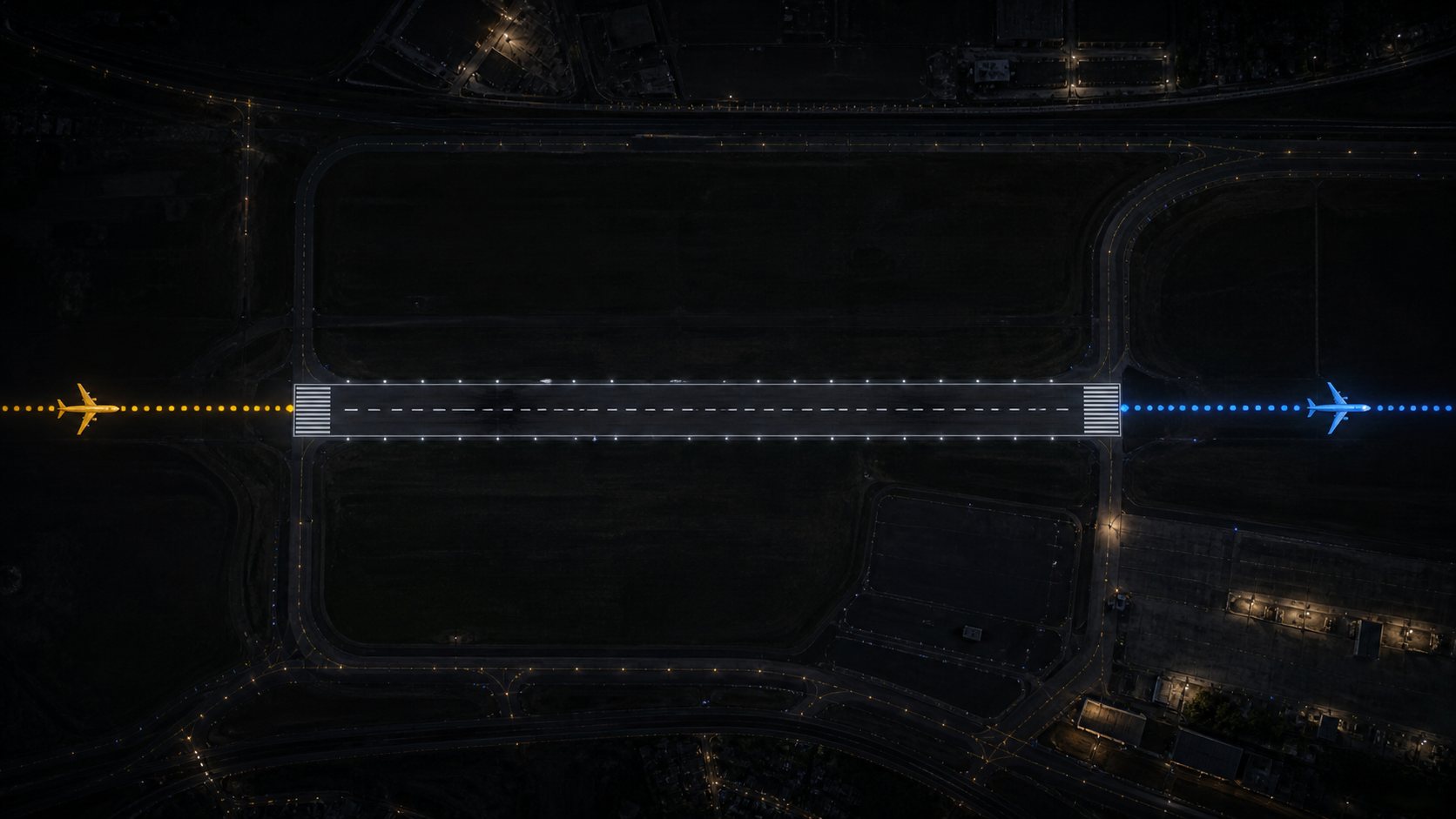
Two aircraft moving in the same direction along one runway corridor, with amber and blue paths representing complementary station coverage
EXISTING NODE YOUR NODE?
ONE CORRIDOR. TWO NODES.

Before
you say yes

Remote accessWe reach the unit itself, and only the unit. Never your home network, never your computer.
Data licenseEverything the node records ships CC BY 4.0, same as the rest of the network.
StatusThe network's coordination layer is still being built. You're an early applicant, not day-one operational.

Last item
on the checklist.

Five lines by email, nothing more formal than that.

  1. Where exactly, and what you see from there relative to the runway.
  2. Your comfort level with a Raspberry Pi build.
  3. Base kit only, or which extras.
  4. Why this, why you.
  5. Free for a short call before we go further.

Not ready for the full build? There are other ways to get involved.

All published data (dashboards, monthly reports, imagery) is released under CC BY 4.0, free to reuse, including commercially, with attribution.
Email the Captain →